Index:


Cars

  • Ferrari 599GTB Fiorano

    Ferrari 599GTB Fiorano

    I recently traded in my Lamborghini Murcielago and replaced it with a Ferrari 599BGP Fiorano.

    IMG 5093 

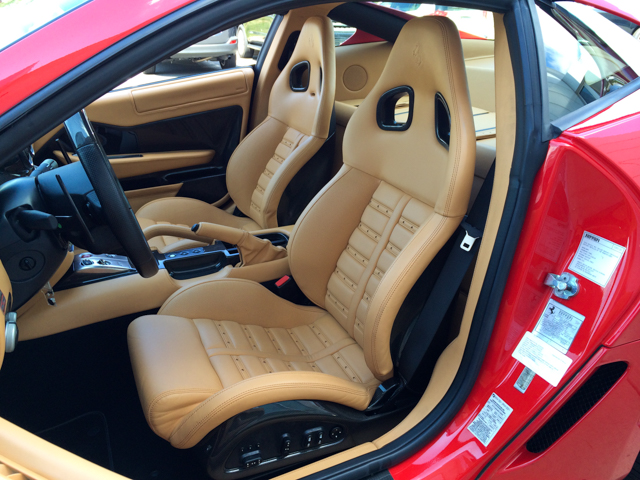
    I’m really enjoying how much more civilized it is than the Murcielago. I can get in it and just drive, no worrying about what will happen if there is a raindrop, it is a coupe, and so is much quieter, the visibility is great, and because it is rear-wheel drive (not all wheel drive) you can have some more fun with it 🙂


    IMG 5095

    IMG 5108

    IMG 5115


    It is, of course, Rosso Corsa over tan.


  • Repainting Ferrari 599 Key

    Repainting Ferrari 599 Key

    Because of the snow and cold we’ve had this winter I wasn’t able to take my 599 out, or even spend some time in the gararge detailing it. 

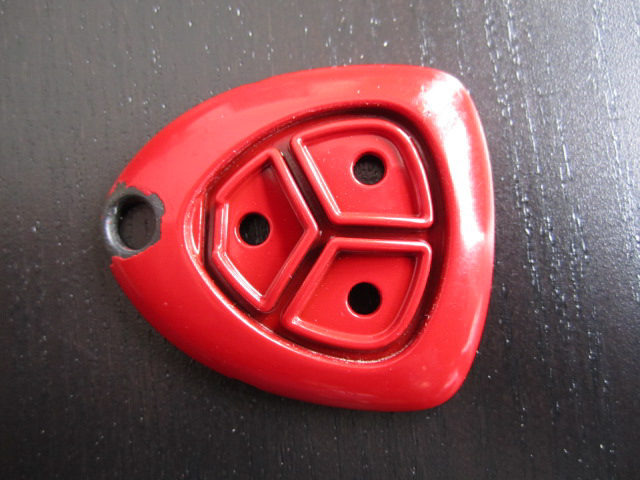
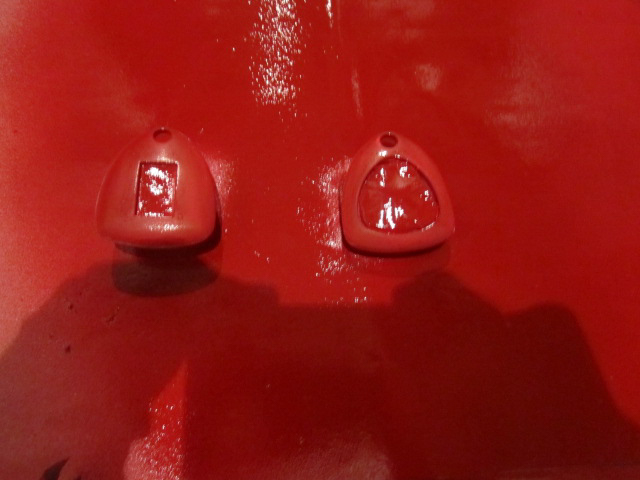
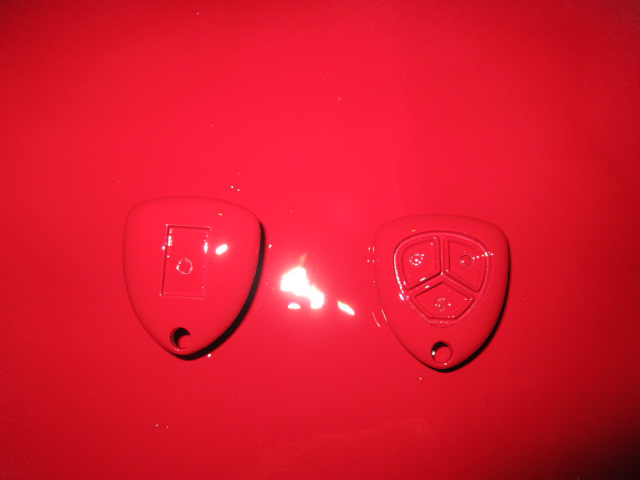
    This made me antsy, and so I decided to finally take care of a minor issue that had been irritating me for a long time — the paint was shipping off the keyfob. This is a common issue, and usually starts right around the hole where the key attaches to the keyring.

    Here is a small writeup for others:

    Step 1: Disassemble key.

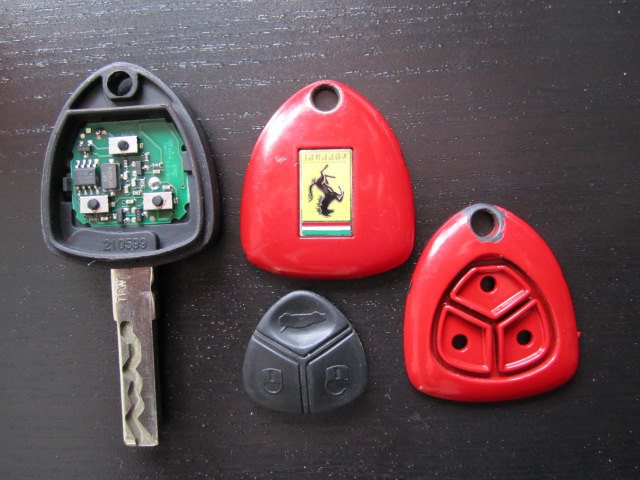
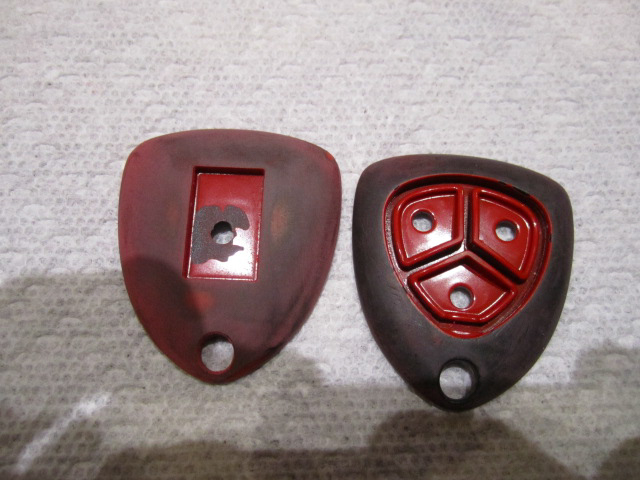
    The back (with the emblem) pops off easily; insert a small screwdriver in the slot and pop it off. While it is off, you might want to replace the battery and save yourself from later issues. The front also snaps off, but needs a thin blade inserted between the black casing and the front to pry it off. Getting the rubber button bits out needs a small blade, and you carefully pry it out. It didn’t seem to be glued, simply press fitted.

    IMG 0149IMG 0151

    Step 2: Remove the emblem

    Getting the emblem off was easy enough. I initially tried wedging a blade under it, but it seemed clear that that would scratch either it, or the caseing. I ended up drilling a small hole through the back of the casing, and then simply pushing it out from behind (obviously, don’t drill through the emblem itself!)


    Step 3: Sand off old paint

    I used some 600 grit paper, placed on the sponge side of a (dry) Scotch-Brite Non-Scratch Scrub Sponge. This seemed to have just the right amount of “give” to remove the paint without changing the shape of the key.

    IMG 0153

    Step 4: Prepare for paint.

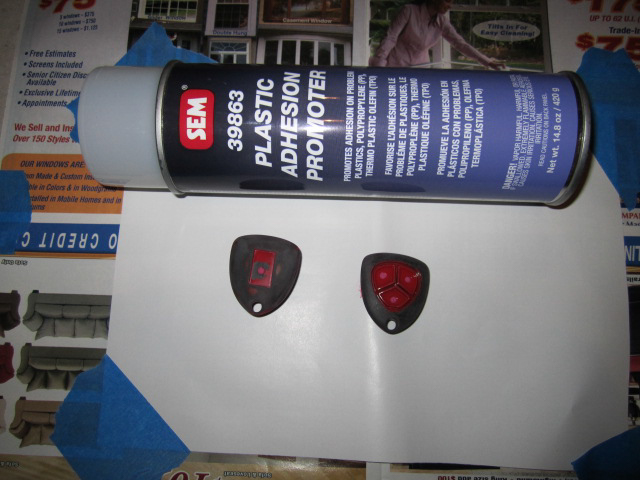
    After cleaning the sanding residue off with isopropyl alchohol I prepared them for paint. It was too cold to paint them outside or in the gararge, and so I did it in the utility room in the basement. I raised them off the paper with some playdough and then gave them a quick spray with SEM 39863 Plastic Adhesion Promoter.

    IMG 0155IMG 0156

    Step 5: Paint

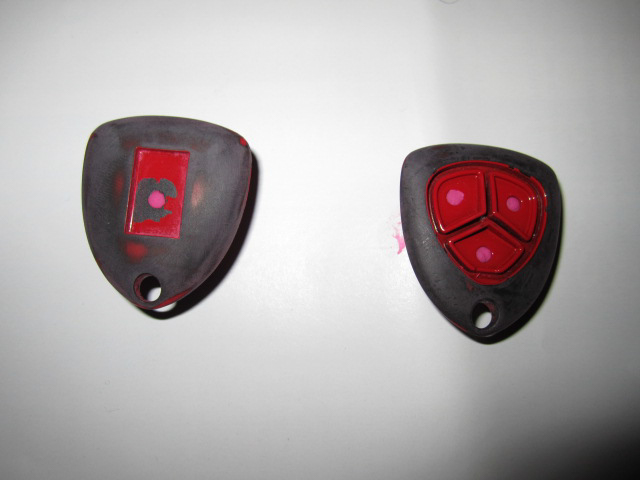
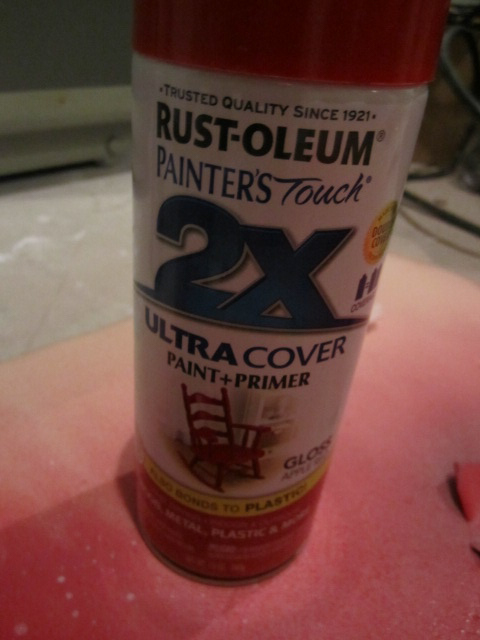
    I gave them a quick spray with white primer. Without this, the red would come out too dark, and not “pop”. I then gave them 8 coats of Ferrari Rosso Corsa / PPG 322 paint, goodly waiting between each coat for it to dry fully. Ok, that’s not actually true, I got impatient and only waited 20 minutes between coats. This means that the parts are taking forever to fully dry, and are still not done. 

    IMG 0166IMG 0161

    IMG 0168

  • Creating a CTEK to Ferrari adaptor cable

    Creating a CTEK to Ferrari adaptor cable

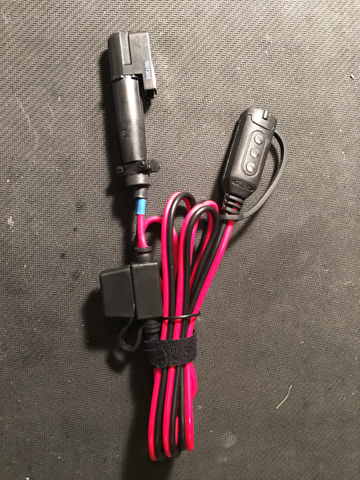
    For a number of years I’ve been making adaptor cables to convert from the proprietary Ferrari charger connector to the CTEK connector. This allows people to use the CTEK series of chargers to charge / battery tend their Ferraris. Ferrari rebrands the (lowest end) CTEK, and puts on thier proprietary connector, but many people would rather use one of the higher end / more sophisticated CTEK, or replace a dead Ferrari branded one, etc. 

    Using the Ferrari connector is much nicer than simply wiring the ring terminals to the battery, including:

    • It is more convenient – the Ferrari connector is bolted to the vehicle, and so less fiddling around in the footwell.
    • Much simpler – you simply plug in a connector, you don’t have to unbolt panels and bolt ring terminals to the battery.
    • Most importantly (to me at least), the Ferrari connector includes a “sense” wire. This means that the car will display an icon on the dashboard and refuse to start while the charger is connected, this prevents the embarrassing driving off while the charger is connected issue 🙂
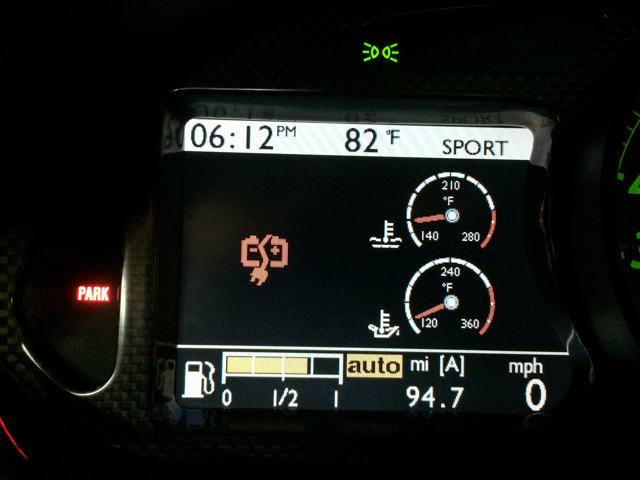
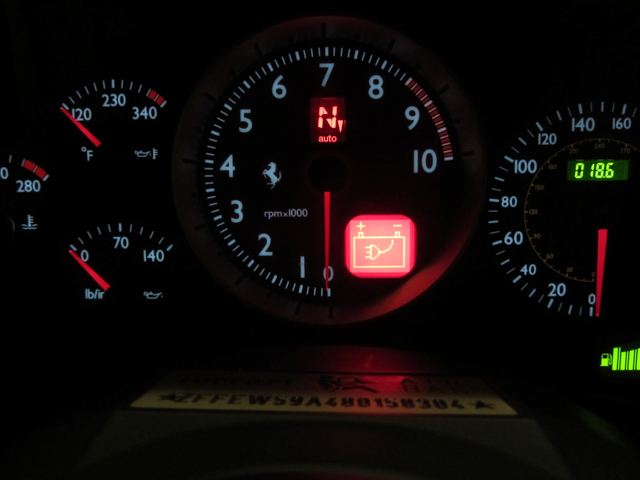
    599GTB Charger connected  F430 charger connected

    I make (and see these) cables, but I’m as happy for people to make their own (I’m somewhat OCD about making cables, and have over-engineered these. This means that it takes me around an hour per cable to make. The amount I sell them for isn’t really worth my time, so I mostly make these for the good of the community).

    If you have any questions, email me at warren@kumari.net.


    Parts:

    • MBG4P-1 – DigiKey: SOU1192-ND $8.05ea – 4 Pin Souriau MBG Series Connector
    • MBG4S-1 – DigiKey: SOU1196-ND $4.30ea – 4 Pin Souriau MBG Series Shell / Strain Relief.
    • RC14M50K – DigiKey: SOU1970-ND $1.11ea (x 3) – Souriau 14AWG Machined Crimp Connector OR
    • SC14ML1S6 – DigiKey: SOU1247-ND $1.62ea (x 3) –  Souriau 14AWG Stamped Crimp Connector
    • CTEK (56-384) – Amazon: LINK $9.99 – Comfort Indicator Clamps
    • 18AWG strunded wire
    • Various heatshrink
    • Hotglue

    I have provided part numbers for both machined (RC14M50K) and stamped (SC14ML1S6) contacts. The machined contacts are much nicer, but require a specific crimper head (S16RCM1450  $292) and handles (SHANDLES $125). The stamped ones work OK, and I’m using them in this tutorial because I don’t really expect people to buy $417 worth of crimper just to build one cable. Actually, I’m using the stamped connectors meyelf at the moment, because my S16RCM1450 head broke, and the replacement is backordered till 1/8/2016. Whatever contacts you choose, you should buy a bunch of them – Digikey shipping is quite expensive, and you may miscrimp some.

    Pinout:

    • Pin 1: +12V
    • Pin 2: Sense
    • Pin 3: Ground
    • Pin 4: N/C

    When Pin2 is raised to +12V to illuminate the warning icon on the instrument panel and prevent the vehicle from starting.

    Instructions:

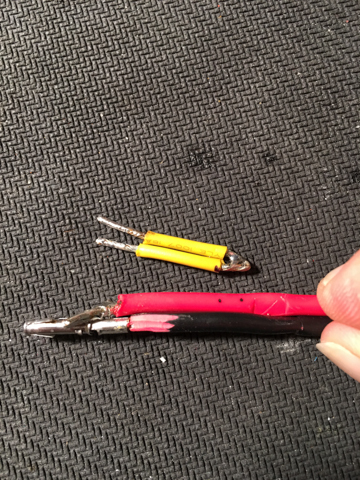
    Start off by removing the clamp connectors – prise off the plastic protectors, and then unsolder the clamps. Do not cut off the clamps, or the remaining wire will be too short to easily insert with the strain relief and connector.

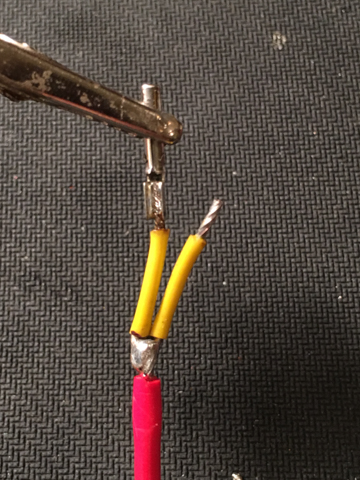
    Crimp a contact onto the (tinned) black (ground) wire. As I mentioned, I’m a little anal about making cables, and so I go a little overboard. This is how I do mine:
    IMG 3007

    Add a tiny bit of flux into the connector cup, and then add some solder into the cup. Then put in the tinned cable, and heat if from the bottom (to make sure that solder fully wets / flows. Then crimp (with good quality, ratcheting crimper with the correct sized head, for example a Wiha 436) the connector on, and finally flux over the top of the crimp and solder over the top. I’ve tested this system, and it provides me a much stronger (and lower resistance) connection than crimping or soldering by itself.

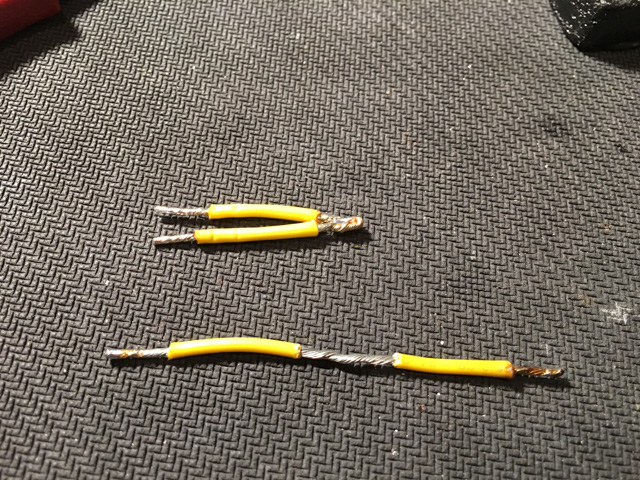
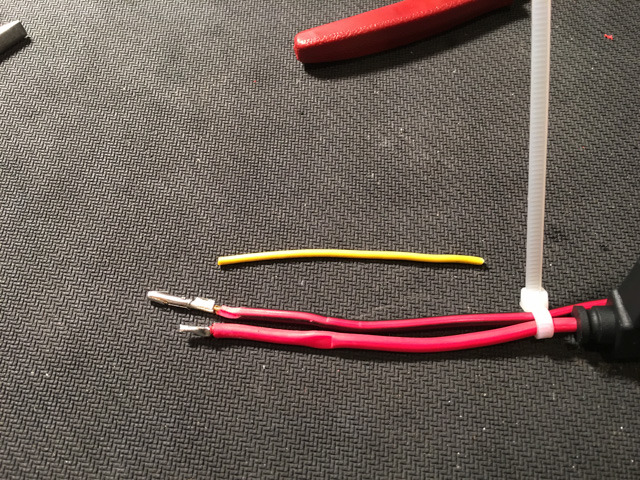
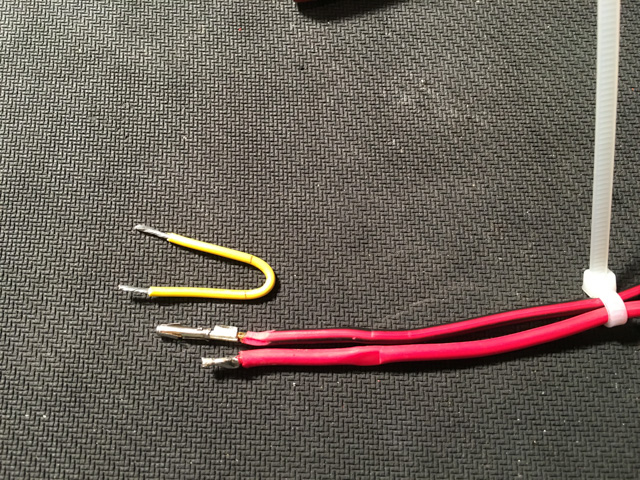
    Next, cut a 3.5″ piece of 16AWG stranded wire. Fold this in half, and mark 0.25″ down from the fold. Unfold this, score round the insulation and then cut down the length of the insulation, and remove this piece. Then trim ~0.25″ of insulation from each end.
    IMG 3023  IMG 3024  IMG 3025

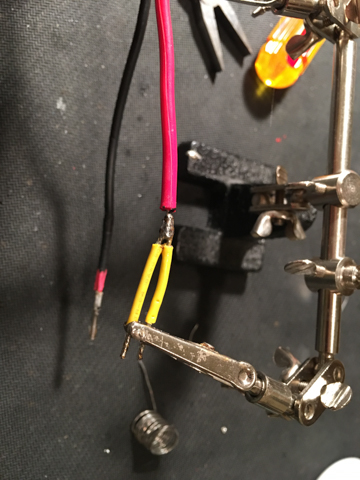
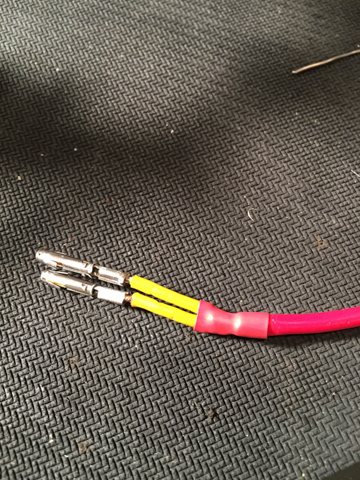
    Now, fold the cable again, liberally flux it and then tin the center and ends. Make sure to not have the insulation touching when tinning the center or it will stick. Now, lay the folded, tinned 16AWG wire next to the carger cable, and carefully align them. I ziptie the red and black together to make sure that they are nicely aligned. Now, mark and cut the red (12V) cable, making sure to take into account the length of the wire going into the contacts, and enough to solder – you want the wires to be the same length so that they have the same tension. Solder the contacts onto the ends of the 16AWG wire, using the technique above. 

    Now solder the charger wire onto the 16AWG jumper, and put on a bit of heatshrink.
    IMG 3006  IMG 3007 IMG 3028  IMG 3010

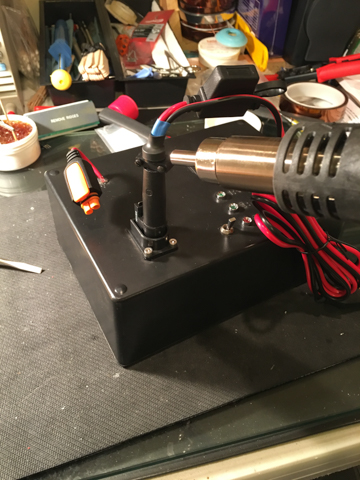
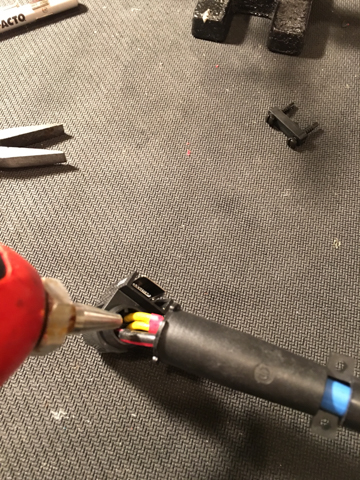
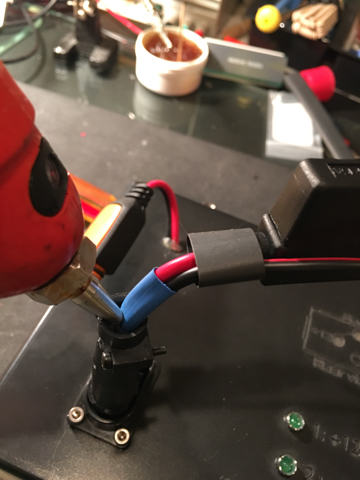
    When shrinking the heatshrink, I use a hot air surface mount solderer. This works much better than a heat gun (or lighter!), because it makes a much more focused stream of air – without this, you rish melting the insulation. 

    Next, slide on some heatshrink and don’t forget the shield, or you will become very sad. 🙂

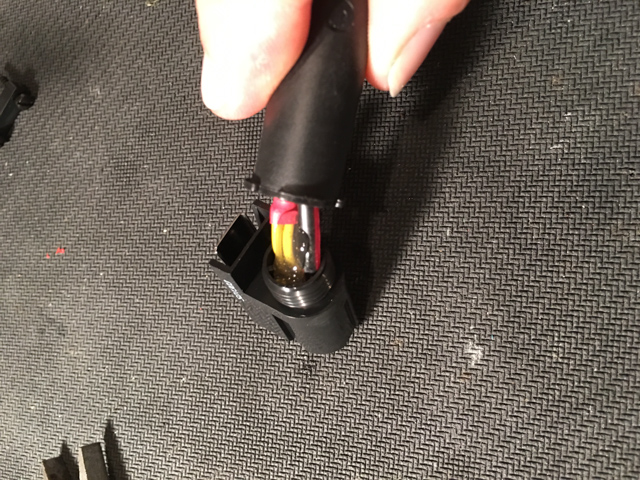
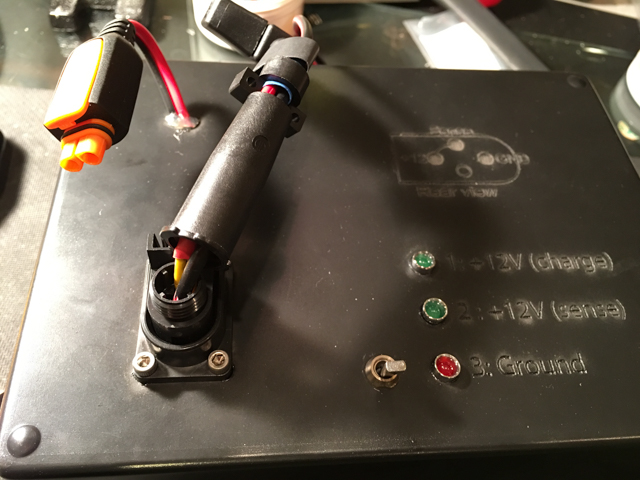
    Now, insert the contacts into the shell, making sure that the contacts have fully seated. This will be quite fiddly (especially if you included some heatshrink to go over the back of the strain relief), and you will be glad that you unsoldered the clamps, because this gives you an extra ~0.25″. I use a pair of needle nosed pliars to push the wires from the back. Now, test the pinouts to make sure you have it all right. I have built a test jig to allow me to accuratly and quickly test mine, but a multimeter will work. 

    Once you have triple checked the pinouts and that there are no shorts, squeeze some hotglue into the back of the connector shell, slightly overfilling it, and then quickly screw the strain relief on. This will tightly hold the cables, provide good strain releif, help keep things dry (and corrosion free), and prevent it unscrewing.
    IMG 3012  IMG 3026 IMG 3027

    Now, add some more hotglue in through the cutout in the strain relief, and quickly screw the cable clamp onto the back. Some hotglue will squish out, trim this off with an xacto knife, and then hit it with a heatgun to clean it up. Now, put some more glue in through the back of the strain relief and slide the last piece of heat-shrink over the back and shrink it on.
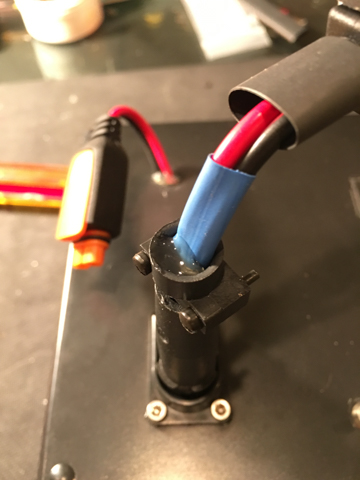
    IMG 3015 IMG 3016 IMG 3017 

    Finally, test it one last time, and you are done!
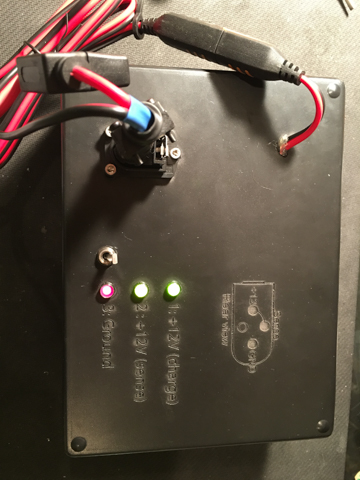
    IMG 3019  IMG 3021

    You could do this all with much less work, by cutting a bunch of corners (like just crimping the contacts, or splicing wires together, or not using the correct crimper), but, if you are going to bother doing it at all, you might as well do it right.


     

  • Ferrari 308 Projects

    Ferrari 308 Projects

    P1030003

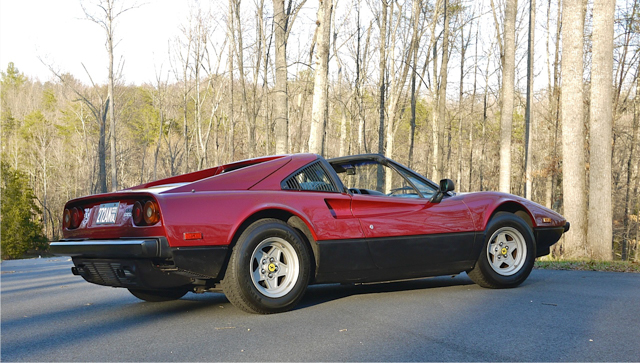
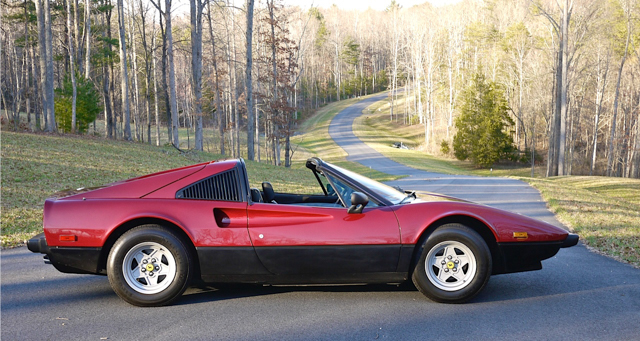
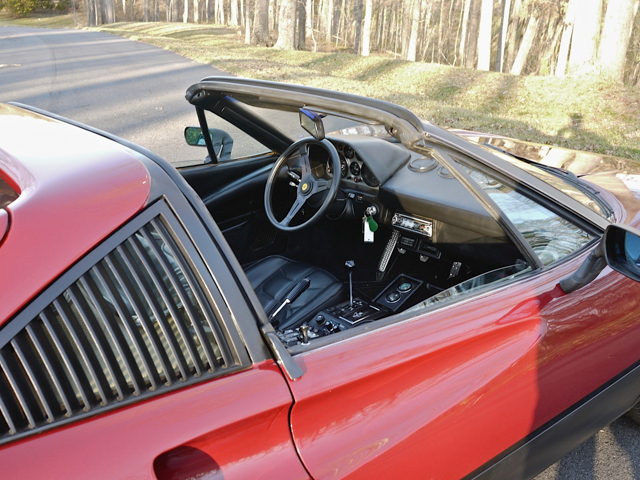
    I recently got a 1980 Ferrari 308GTSi, primarily as a restoration and project car.
    I first fell in love with Ferraris from watching Magnum P.I, and this is the Magnum car, so…

    I’ve put up some photos of the car here and some of the work photos here

    I’m planning on making sub-pages with details on some of the repairs for others.

    I’ve been trying to keep a list of what all I’ve done to it. I’ve managed to forget many of the things (many of them are a “while I’m in here I might as well just…” type events). Here is an initial list, from April 2014 to August 2014:

    What
    Changed drivers’s rear outside brake caliper.
    Bled brakes (drivers rear only, purchaced caliper adjuster covers)
    Installed Edelbrock/Russell Speed Bleeders on rear calibers
    Removed handbrake pully mechanism, disassembled, cleaned and lubed
    Painted rear emblems.
    Removed driver’s door panel, lubricated the window motor / mechanism, cleaned window switch contacts.
    Cleaned signal / headlight contacts.
    Removed driver’s seat, fixed seat rails (slider mechanism / bearing worn, removed bearings)
    Removed and clean shift knob, removed and polished shift gate.
    Removed tail lights, disassembled and cleaned
    Installed JVC KD-NX5000 Single DIN NAV system
    Installed replacement powered radio antenna
    Removed and cleaned battery connectors, grounds in front trunk, repaied battery cutoff switch.
    Made new spare wheel tie down (McMaster Carr)
    Installed Dynamat in trunk, cleaned and repaied sound insulation / heat stuff
    Reglued trunk carpets (rear, light covers, etc)
    Redid the trunk weather stripping (replace sometime?)
    Painted exhaust / cat cover
    Removed and painted pedals
    Disconnected cold start air valve
    Cleaned contacts on Magneti Marelli MED 801A Digiplex (ECUs)
    Cleaned contacts on ignition coils
    Installed new fuel accumulator. Discovered frayed fuel hose.
    Installed new LED headlights
    Installed new braided steel tank to pump fuel line
    Replaced clock.
    Removed and painted plenum
    Removed and cleaned throttle body
    Replaced fuel lines from fuel distributor to the injectors on bank 1
    Replaced all fuel injectors – reused injector seals
    Replaced the oil sender unit.
    Replaced oil filter / oil / crush washer
    Replaced fuel lines from fuel distributor to the injectors on bank 2
    Drove Bluemont to Dulles
    Drove Father’s Day carshow.
    Fixed fiberglass in passender door card (so card stays on better)
    Installed Dynamat in passenger door card
    Restrung and relubricated the passenger side window. Now closes fully!
    Installed new door edge warning lights
    Adjusted passenger door lock / locking mechanism
    Installed stainless steel braided brake lines, bled brakes.
    Installed new front and rear brake pads
    Painted and reinstalled undertray
    Adjusted handbrake cable
    Replaced fuel filler hose (Gates 23976), cleaned up filler neck, cap, vent tubes
    Cleaned and painted passenger fron suspension arms
    Created battery tie down plate, bolted down battery.
    Installed new battery cut-off switch
    Adjusted clutch cable, took up slack and lubricated cable (now doesn’t have odd detent!)
    Installed new duct to airbox boot.
    Installed Verell’s shifter bushing
    Repaired driver’s door lock spring.


    P1030007

    P1030013

  • Aston Martin V8 Vantage

    Aston Martin V8 Vantage

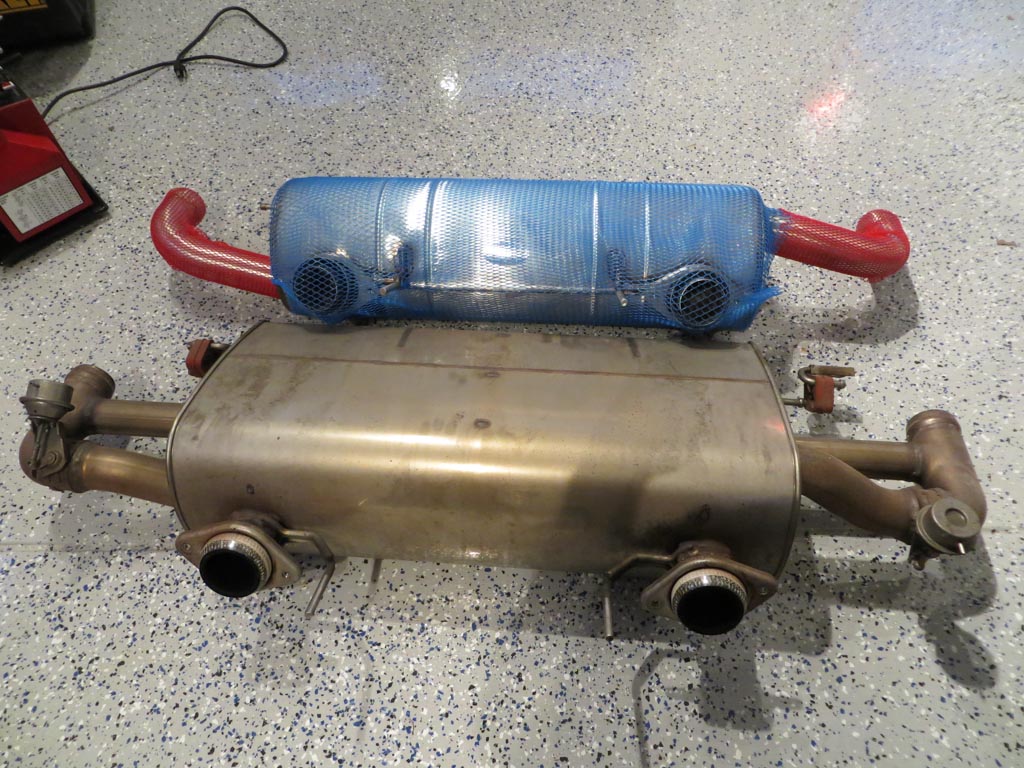
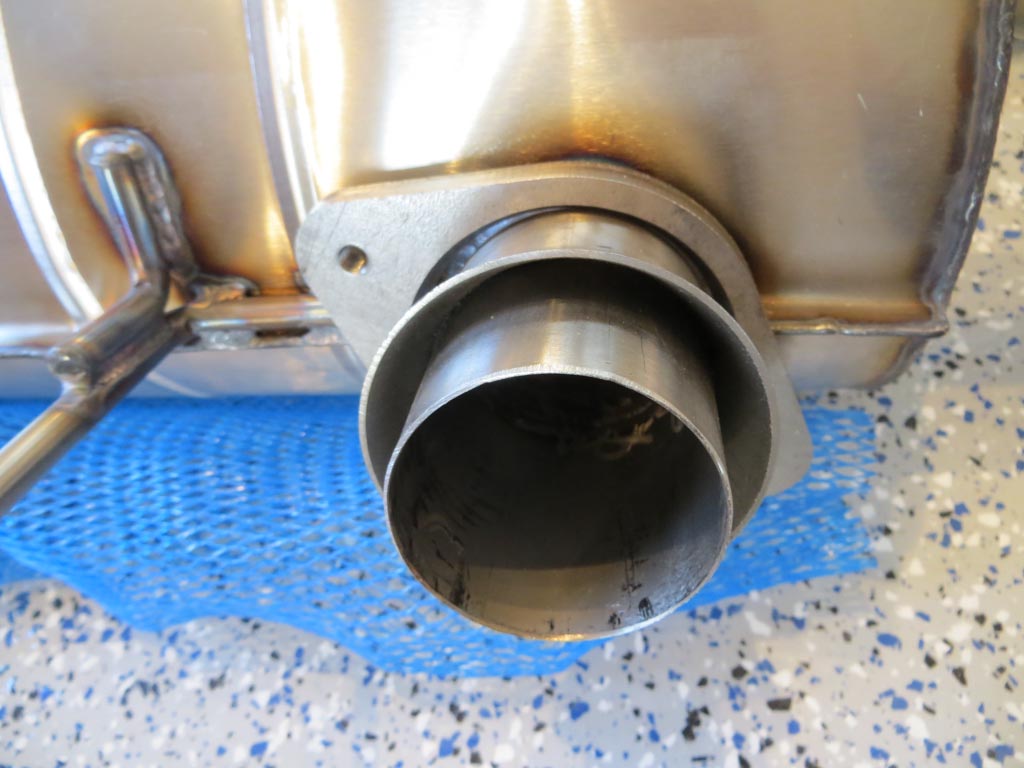
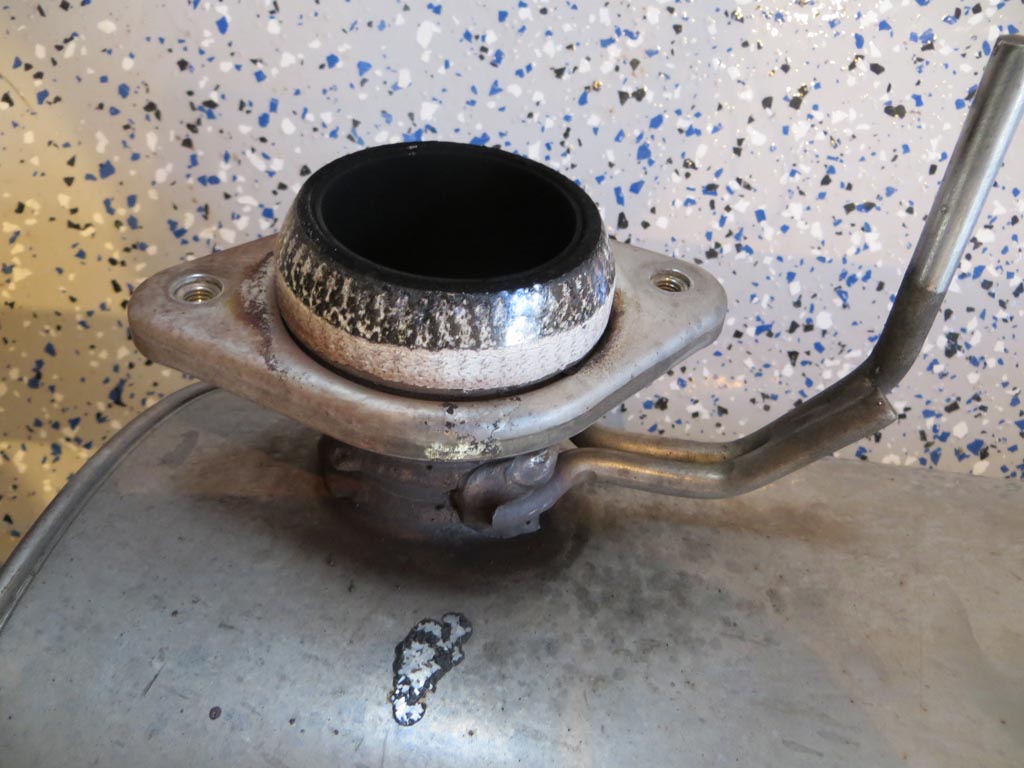
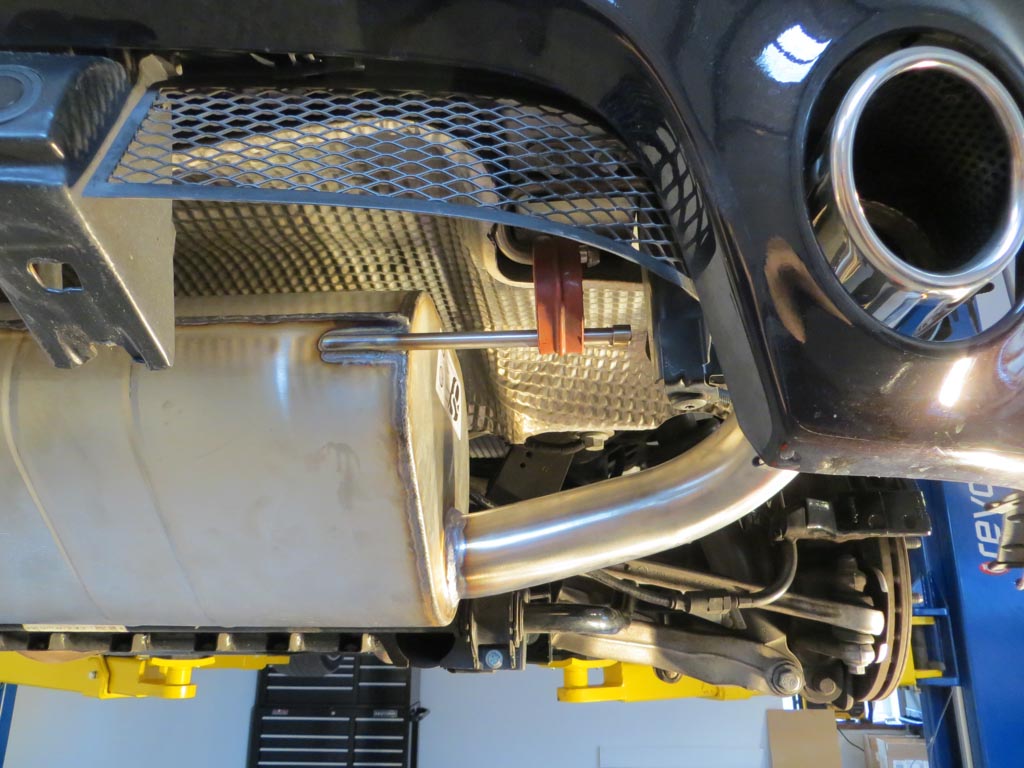
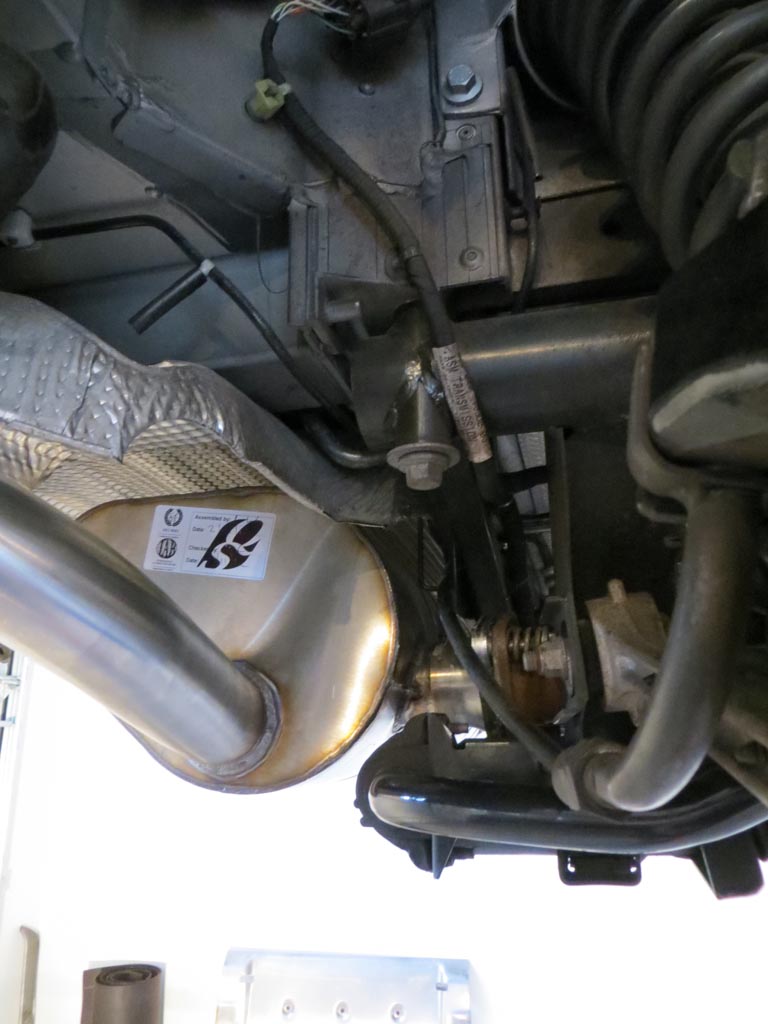
    A while back I replaced the stock muffler on my Aston Martin with a QuickSilver SuperSports-Plus system. This is much lighter (24lb vs 40lb) than the stock unit, and has a great sound.


    This completely changed the entire feel of the car, and took if from being a sedate grand tourer to a proper sports car that loves twisty backroads. As far as I’m concerned this is one of the best exhaust notes I’ve ever heard (other than maybe the Murcielago with a custom exhaust in a tunnel), way more musical than the typical Ferrari note.

    Replacing the muffler required removing all the under trays. I took this opportunity to clear / polish the trays, check the air filters (which were remarkably clean), etc.

    The hardest part (other then the really heavy old muffler) was finding the donut exhaust gaskets. It seems that basically no-one other than the dealer stocks these. A temporary alternative is to take two half-donuts and slather them with muffler and exhaust sealant and use these — at least until the dealer gets the right ones in stock.


    More photos here